Capability architecture
The identities that open doors.
Stealer logs and credential dumps are matched to your monitored identifiers, then tied to the portals, roles and relationships that decide whether an exposure matters.
01Why it matters
- A leaked password for a disused account and a live single sign-on session for a finance contractor look the same in a dump. They are not the same risk.
- Third-party and contractor identities are routinely the hop an adversary uses, and they rarely appear in your own directory.
- Credential monitoring that validates logins or probes your systems creates risk of its own.
02ThreatCanary approach
- Stealer logs, credential dumps and session material are collected, preserved with provenance and matched to your monitored identifiers.
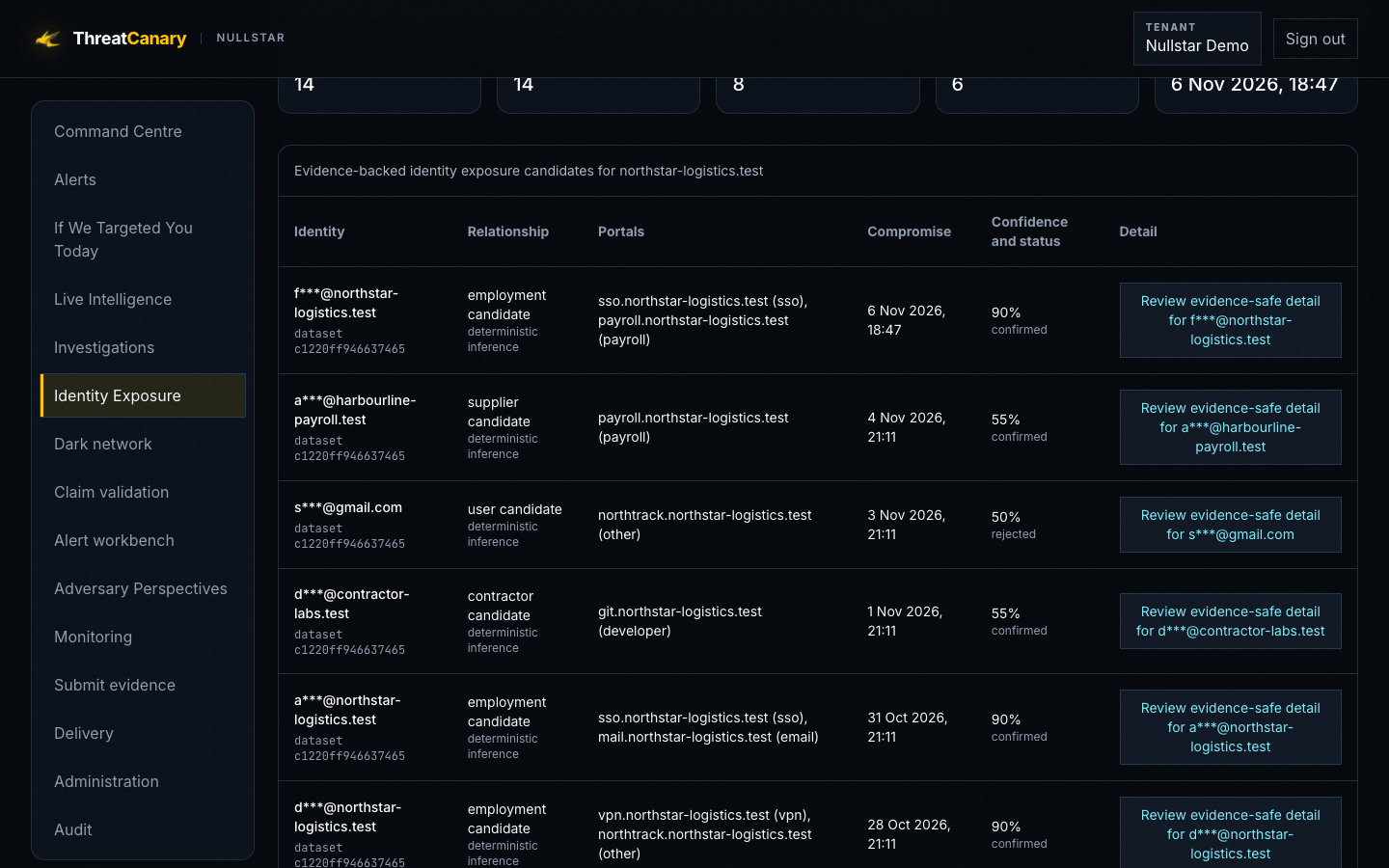
- Each exposed identity is connected to the portals it reaches, its relationship to you and the compromise date, with a confidence rating.
- Monitoring domains are identifiers only — adding one never triggers DNS lookups, discovery, scanning, credential validation or contact with the organisation.
03What you see
- An evidence table of identities, their relationship, the portals they reach, compromise date and confidence.
- An evidence-safe detail view for each identity that never renders images from collected content.
- The identities that appear as hops in your adversary perspective and alerts.
04Evidence produced
- Identity exposure records with source provenance and compromise date.
- Portal and relationship context for each identity.
- Recommended defensive moves — revoke sessions, reset credentials — tied to the evidence.